Related Articles
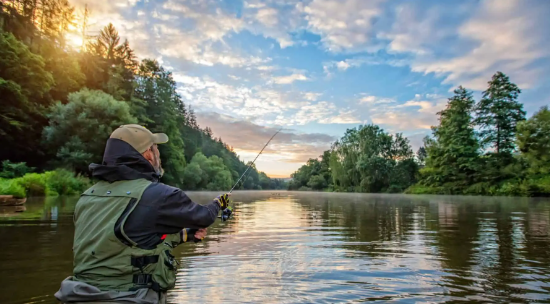
Recommendations for Stream and River Fishing
River and stream fishing offers a thrilling experience with chances to interact with nature in addition to a possibility to catch fish. Knowing the subtleties of river fishing will improve your success and enjoyment whether your level of experience with angling is new or experienced. From equipment choice to fishing methods, this page will explore basic advice for fishing in rivers and streams.
grasping River Dynamics
The Value of Now
Understanding the current is absolutely vital while fishing in streams and rivers. Fish behavior can be much changed by water velocity. Fish often gather behind boulders, under submerged logs, or in deeper pools where the current is less strong. Knowing these areas can help you to land a catch more likely.
Changing seasons
Fish behavior and mobility change with the seasons. Fish are frequently more active springtime as they get ready to breed. While fall could cause a feeding frenzy as they get ready for winter, summer they search for cooler waters. Fish often hide in deeper waters in winter and show less activity overall. Your fishing approach will be better if you understand the seasonal trends of the species you are aiming at.
Selecting the Correct Gear Rod and Reel
Fundamental is choosing the right rod and reel. River fishing is usually best suited for a medium-action rod since it offers a decent mix between sensitivity and strength. Combining this with a spinning reel appropriate for your degree of competence can help For bigger rivers, give more control some thought using a baitcasting reel.
Line and Attack
Another key is using the correct line. While braided lines give better strength and sensitivity, monofilament lines are flexible and simple to handle. Regarding tackle, pick weights and hooks suitable for the species you intend to target. To fit many conditions, be sure you have a range of lures and baits including spinners, jigs, and live bait.
Learning Effective Fishing Methods
Casting Techniques
River casting calls for a different strategy than on still waters. Get your casting technique perfect to guarantee distance and accuracy. Longer distances benefit from overhead casting; sidearm casting will help you negotiate obstructions.
Drift fishing
Popular method on moving water is drift fishing. It’s letting your bait move naturally with the flow. For trout and other animals that eat in flowing water, this approach is especially successful. Keep your bait at the proper depth with a float; then, modify your weight.
Bottom Hunting
River bottom fishing can be quite successful. Many species eat along the riverbed, hence your bait will work very well if you set it at the bottom. Keep your bait in place against the flow using larger weights.
Knowing Fish Behavior: Feeding Patterns
The eating behavior of different fish species can affect your fishing approach. During hatch seasons, for example, trout are commonly surface feeders while catfish typically eat at the bottom. To customize your strategy, learn about the particular species in your target river.
Day of Time
Fish activity might also change with the time of day. Fish are more likely to be feeding in early mornings and late evenings, hence these are usually the best times to visit. Still, cloudy days can cause more activity all around the day.
Safety and Conservation of Resources
Remain Conscious of Your Surroundings
Fishing in rivers and streams calls for maximum safety. Always be mindful of your surrounds, particularly water levels and current strength. If fishing from a boat or in rapidly flowing water, wear a personal flotation device (PFD).
Honor the Environment
Maintaining good fish numbers requires constant practice of conservation. Use local rules on size restrictions and catch limits. Practice catch and release as well, depending on the situation to help to maintain the ecology.
Developing Local Knowledge
relating to nearby anglers
Interacting with nearby fishermen can provide insightful analysis of the finest fishing locations, methods and seasonal trends. To share knowledge and experiences, think about becoming a member of neighborhood fishing groups or forums.
Utilizing Internet Resources
Many internet resources available in the digital era can help with your fishing efforts. Real-time river condition and fish activity can be accessed on websites, forums, and social media groups devoted to fishing.
Conclusions
River and stream fishing offers a fulfilling experience combining knowledge, ability, and a passion of the natural world. Your fishing experiences will improve if you know river dynamics, pick the correct gear, learn fishing skills, and value the surroundings. Keep in mind to savor the trip since every trip offers the chance to encounter fresh events and narrative possibilities.
Overview
To refresh memory, good river fishing calls for:
Knowing seasonal changes and present dynamics.
Selecting the correct equipment rods, reels, lines, and tackle among others.
Learning several fishing methods, including bottom and drift fishing.
Understanding fish actions and feeding patterns.
Give environmental preservation and safety top priority.
Using links and internet resources helps one develop local knowledge.
Equipped with these guidelines, you are ready to start your next river fishing trip. Joyful fishing.