Related Articles
Effective Fish Finder Effectual Techniques

By helping you to more quickly find fish, a fish finder will greatly improve your fishing experience. Whether you fish often or just recently, learning this technology will change your attitude to the game. This book will provide you thorough understanding of how to make good use of a fish finder.
Comprehending Fish Finders
What is a Fish Finder?
An electronic gadget called a fish finder detects underwater objects including fish by means of sonar technology.
It generates an underwater environment visual depiction by sending out sound waves and timing their return. This technology lets fishermen know where fish are found and grasp the water body’s structure.
Variations of Fish Finders
Fish finders of several kinds are available each tailored for distinct fishing circumstances and preferences:
Designed mainly for fish finding, standalone fish finders are
Combo Units combine GPS and mapping technologies with fish locating capabilities.
Perfect for bank or kayak fishing, portable fish finders are light-weight and easy to carry.
Some current devices link to your smartphone to offer portability and ease.
Important Characteristics to Search For
When selecting a fish finder, give careful thought to the following:
Greater detailed images on larger displays help to explain things.
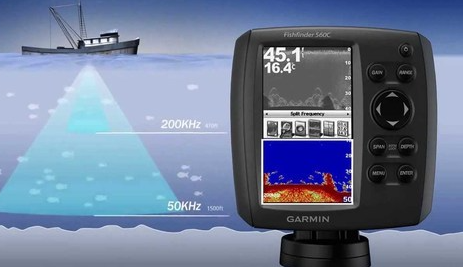
The transducer uses sonar sounds both in sending and receiving. While covering less ground, higher frequencies provide better detail.
Using GPS integration will enable you to designate fishing areas and navigate.
Clearer images and improved target separation come from CHIRP Technology, or compressed high-intensity radiated pulse.
Getting Ready to Use Your Fish Finder : Configuring the Device
You must properly set up your fish finder before you go out:
Mounting : Make sure the transducer is fixed firmly and in a place that lets it operate as it should.
Turn on the gadget and adjust it as directed by the manufacturer.
Familiarize yourself with the settings and adapt them depending on your fishing surroundings.
Comprehending the User Manual
Give the user handbook some time to read. Every fish finder features and setting are different. Knowing these will help you much improve your interpretation of the provided data.
Reading Fish Finder Data Understanding Sonar Images
At first, the sonar images shown on your fish finder can be somewhat overpowering. These suggest ways to understand them:
Mostly fish finders show fish as arches. A fish just underneath the transducer is indicated by a nicely defined arch.
The water body’s bottom structure will usually exhibit a range of textures. A smooth bottom would signify dirt or sand; a jagged bottom suggests rocks.
Look for groupings of forms that suggest schools of bait fish often a clue that predators are close by.
Coding colors
Most contemporary fish finders separate between several underwater components using color coding. As for:
Blue/green: Usually denotes water.
Yellow or red can suggest the presence of structure or fish.
Guidelines for Maximizing a Fish Finder’s Use
Locating the Correct Place
studies: Search possible fishing locations using maps and internet tools.
Verify the current weather conditions. Fish behavior varies with the seasons; hence, be aware of how the state of the environment could influence your fishing results.
Changing Water’s Setting
Never hesitate to change the settings once you’re on the water:
Sensitivity refers to Change the sensitivity to enhance picture clarity and help to filter noise.
Try several frequencies to see which best fits your depth and target species.
Relocating and scanning
Use a fish finder and keep moving.
Drift slowly over possible areas to have a better view of what is below.
Covering Ground : Approach several sites methodically to assist you pinpoint regions of fish concentration.
Modern Methods for Novate Anglers Using Waypoints
The capacity of current fish finders to indicate waypoints is among its better qualities:
Save places where you discover fish or structure for future reference. Mark hotspots.
Go back to successful spots : Use these coordinates to quickly return to good fishing sites.
Using Modern Tools
Many fish finders include sophisticated features meant to provide an advantage:
Side imaging expands your coverage by letting you view events on the sides of your boat.
Down imaging lets you better see what’s directly under the boat, therefore guiding your search for fish lurking close to buildings.
Solving Typical Problems
Signal Lost
Should you have signal loss, look over the following:
Make sure the transducer is free of obstacles and correctly immersed.
Review every connection to guarantee they are safe.
Incorrect Interpretions
If your readings look odd give these ideas some thought:
Change sensitivity to either improve or worsen picture clarity.
Regular calibration of your gadget can help to guarantee accurate readings.
Safety Thoughtfulness Even with a fishfinder,
Stay Aware of Your Environment.
Remember your surroundings even as you concentrate on your fish finder. Look for other boats, hazards, and shifting circumstances of the temperature.
Use Local Rules
Always follow local fishing rules including catch restrictions and licensing. Following these guidelines improves the whole fishing experience in addition to guarantees sustainable methods.
In essence,
Effective application of a fish finder calls for a combination of knowledge of the technology, adaptation to different fishing environments, and constant practice. Following the advice and methods presented in this book will help you to raise your chances of a good catch and enhance your fishing ability. Using a fish finder correctly will make all the difference in your fishing experiences whether you’re on a boat or from the shore. Happy fishing.